
The hundred-and-twenty-two-order disagreement I cannot resolve
A lattice budget and a holographic budget for the same horizon, differing by a hundred and twenty-two decades. One of them has to give.
86 posts.
A lattice budget and a holographic budget for the same horizon, differing by a hundred and twenty-two decades. One of them has to give.
Detecting novelty across N branches costs N log N with signatures rather than N squared with full states. The architecture is forced, not preferred.

One event per Planck four-volume gives a number with two hundred and forty-four digits, and it caps what a simulation can honestly render.
New preprint. Copenhagen and Everett have been treated as competitors for seven decades, with the Born rule as the wedge between them. This argues a conservation law removes the wedge.
The harvesting theorem: a homogeneous multiverse returns O of log N bits regardless of how many branches you run. Heterogeneity is mandatory.
A numerical coincidence I could not explain turns out to be the standard exponential suppression with the coupling pinned by the central charge.

The derived capacity of the horizon, and the fraction of the holographic budget the old numerology was quietly using.
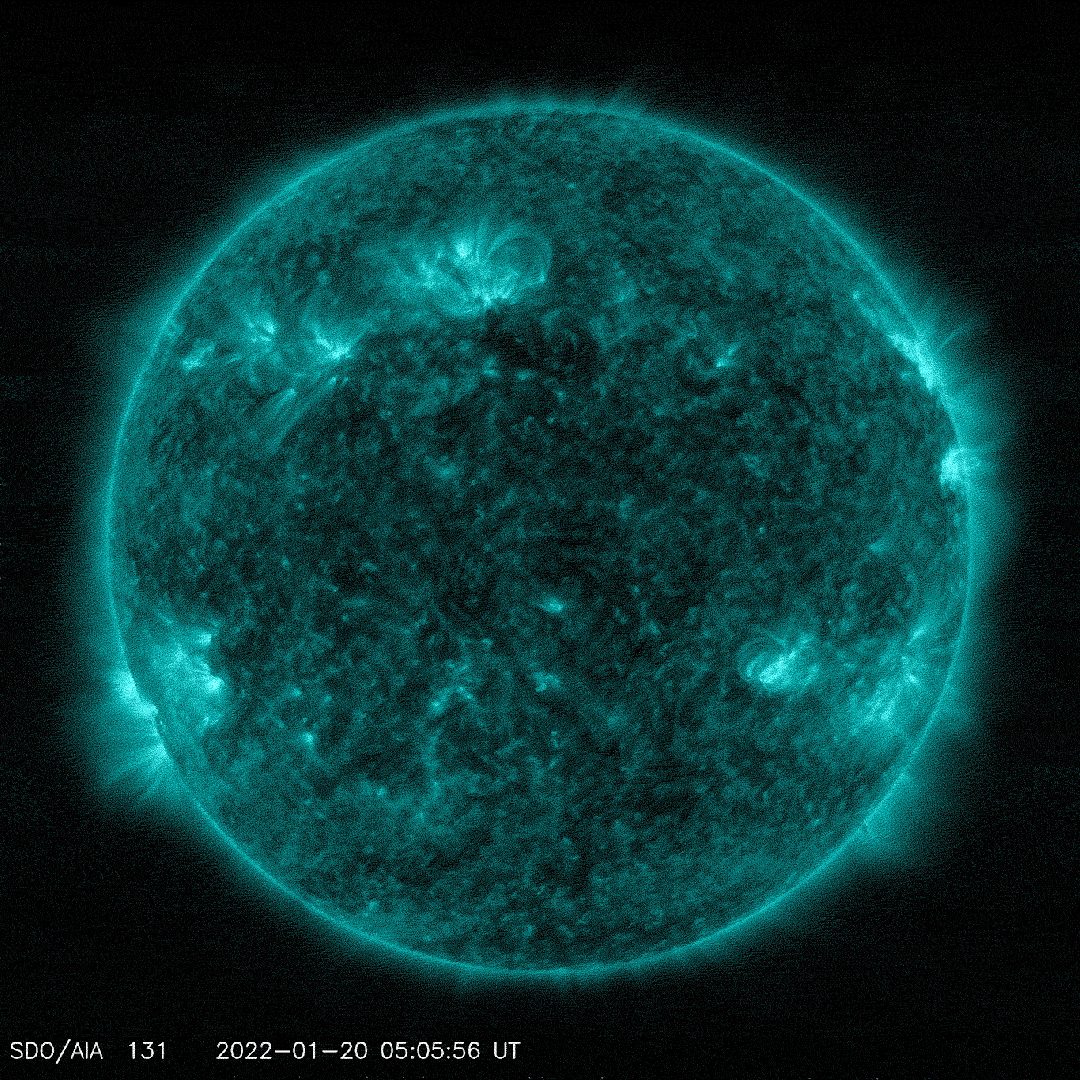
Two times the energy times the time, divided by pi hbar. Applied to a horizon, with three independent bounds agreeing.
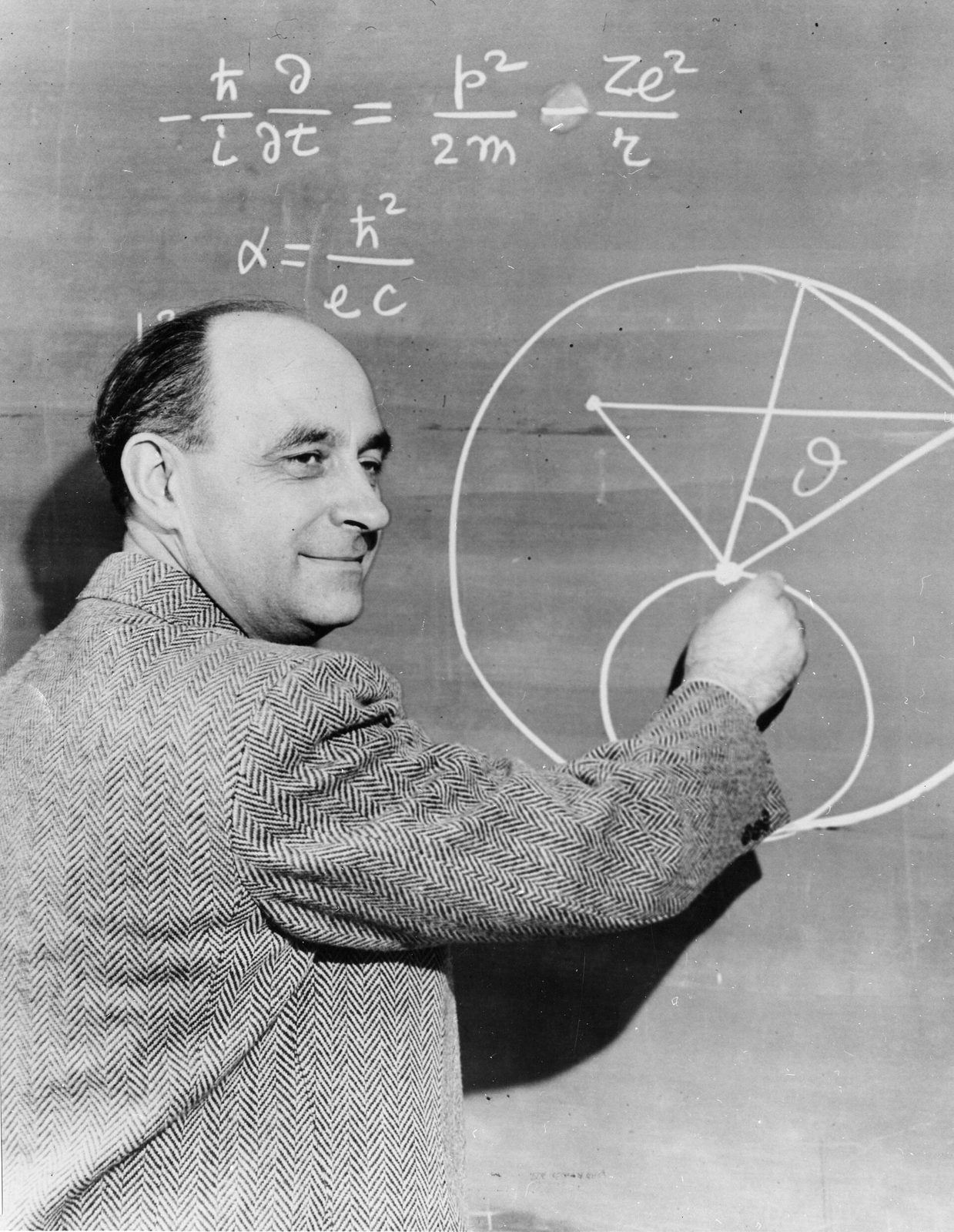
A logistic term from preferential attachment on a finite pool, a quadratic term from obsolescence, and a fixed point that matches a simulation to a tenth of a per cent.
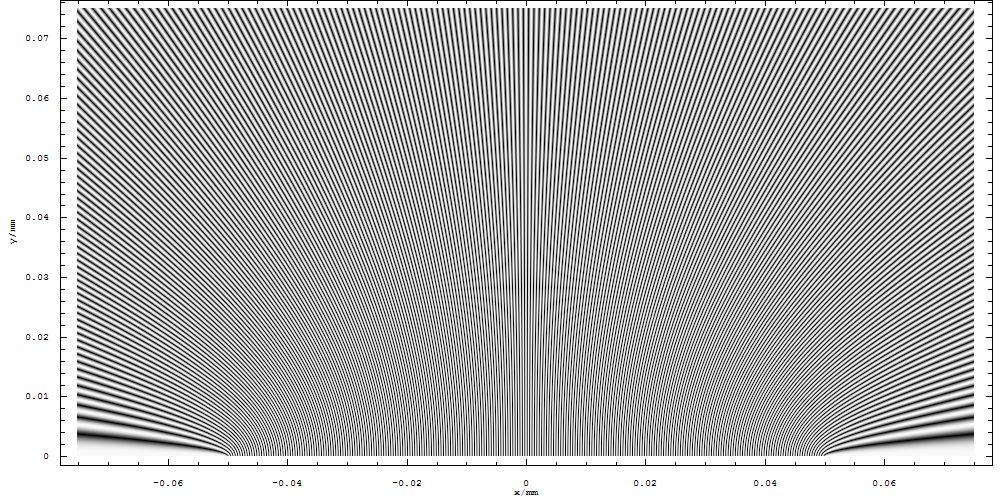
Get a better theory, or get data from different physics. The second one is the entire justification for the machine.
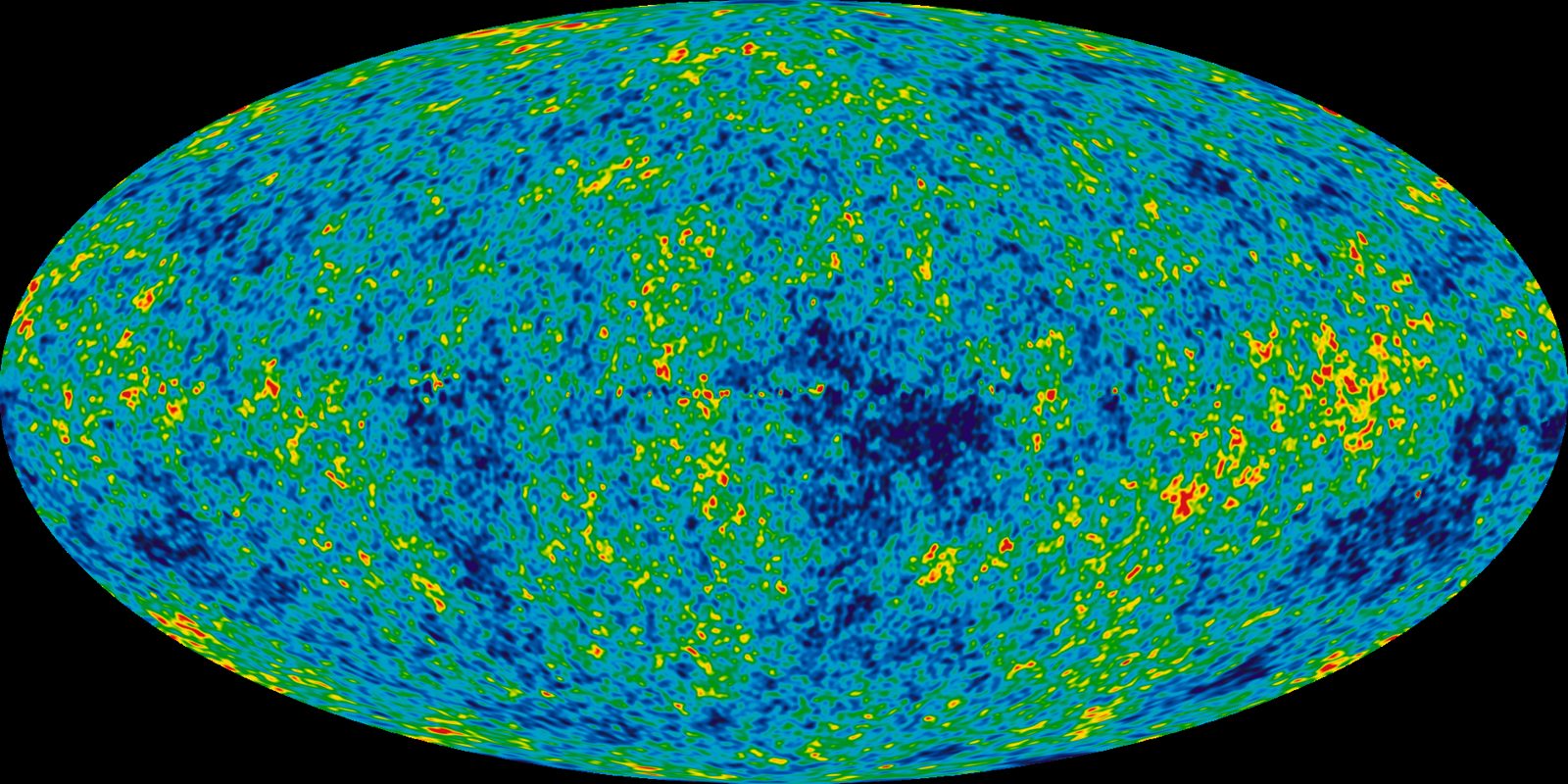
When the truth sits outside your model class the rate still dies, but at a level set by your framework rather than your effort.
If the truth is in your model class, discovery decays to zero and the total budget is finite. Stated, proved, and demonstrated.
Replacing a formula involving agents and rule-set complexity with something you can actually compute: a description length.
Fourteen retractions in one archive is unusual. Here is the argument for treating them as the most useful thing on the site.
An exponential that is not a probability, blowing up to ten to the twenty-seven at a modest input. The fix is in the archive.
Three factors of the same scale cancelling, so that a suppression of ten to the minus sixty-four came out as a third.
A single coefficient that stood between a formula and a match, and where it came from, which is nowhere.

The primordial phase was presented as fixed by modular data. The channel and the prefactor were chosen to give pi over six.
Two ratios built on unspecified factors, disagreeing with the observed values by factors of two and five.

A list of numbers I believed because I never added them. The correction was integers all along.
Setting an expansion rate equal to a replication rate, differing by a factor of ten to the fifty-eight.
A four-tier renormalisation cascade that misses its target by fourteen and a half orders of magnitude, with fitted exponents all the way down.
A divisor described as exact, which was in fact reverse-engineered from the measurement it was meant to predict.
A trigonometric sum that I bracketed correctly and then added up wrongly, in the same equation.
A critical acceleration whose stated formula evaluates to sixty-six per cent above the value claimed for it.
The worst single error in the programme, and the odd comfort that it was caught by its own printed arithmetic.
An identity I presented as independent confirmation, which is really a definition with a missing factor of omega lambda.
N_hor = D_C to the power 72. Neighbouring exponents move the answer four decades. Nothing selected 72 except the answer.
Running the pipeline on synthetic nulls and known answers before touching real data, because surprise is not evidence.
A short guide for readers of this archive, so that a benchmark is never mistaken for a derivation.
The distinction that this programme kept blurring, and the checklist I now use to keep them apart.
Prefer the theory that compresses the data and pays for its own parameters. It is Occam with an invoice.
Pointing a different agent at your own framework and telling it to recompute every number from the printed formulas.
Writing down the falsification threshold before running the analysis, so that a null result still counts.
A closed door is a result. Three of the strongest outputs here are proofs that something cannot be done.
Six labels, applied to every claim. The most useful thing in this project is not a result, it is a habit.
Baryogenesis built on a Lagrangian that had already been withdrawn. Archived with the rest.
A no-go that was correct but was written up as a derivation. Archived.
The newest paper, and the one that stopped leaning on the topological sector. Seven derivations that hold whatever happens to the rest.
An honest map of everyone else working on many worlds, gravity and simulation evidence, with falsification criteria for each.
If the substrate has a discreteness scale, it has a noise spectrum. Deriving the shape is the testable part.
Blinded protocols for surface codes and matter-wave decoherence, written before any data exists.
Asking the same question as Paper 3 but inside a slab of topological field theory, where the answer is either zero or one.
The synthesis of the whole architecture, now carrying a status label on every single entry.
Another archived paper, and a note on why archiving beats deleting.
A likelihood pipeline built so that the framework can lose. That is the point of building it.
A clean idea with no mechanism behind the number it produced. Archived rather than deleted.
The claim that a phase is fixed by modular data, why that claim is weak, and the standard mechanism that supplies it instead.
A two-parameter fit that predicts the neutrino mass sum, followed by a leptogenesis claim that does not survive substitution.
Yukawa couplings from fusion data. Where it fits, where it fails by a factor of two, and the Clebsch factors nobody derived.
Arithmetic that genuinely works, and the part of it that turned out to be standard GUT normalisation wearing a costume.
The most seductive idea in the programme: build the Standard Model from four anyons. It did not survive.
A condensate at 10 to the minus 28 metres cannot explain galaxies. Add a horizon-set collective mode and it can reach them.
Two retractions, one derived capacity, and one exponent that matches to three parts in a hundred thousand.
Plebanski BF theory, a mass gap from the category, and the honest gap between BF and general relativity.
The boundary permeability field, its instanton suppression, and the physical parent it was missing until recently.
An observer inside a branch sees conserved information. The substrate manages many branches. Keeping those two levels apart is the hard part.
Making novelty a monotone rather than a slogan, so that no free operation can manufacture it.
What the dimensionality argument actually establishes, which is admissibility rather than optimality, and why the difference matters.
The stronger and more standard way to get many worlds: separate sectors of one theory, rather than extra branches.
Model cost plus residual cost, with a polynomial fit you can reproduce, because the whole plateau argument runs on this.
The inequality, the two numbers, and the one-line consequence for anyone proposing a classical computational universe.
A three-slit experiment that would break quantum mechanics if it did not come out zero, and what that forbids for this programme.
Spacetime as a growing set of events rather than a stage. The only approach here with both a measure and a dynamics.
The shortest program that outputs your data. Uncomputable in general, measurable in practice, and the reason I reach for a compressor.
Where the logistic term in a saturation law actually comes from, starting from individual researchers picking combinations.
A classical trig sum that fixes an eta invariant, and the place where this programme made an arithmetic slip.
Three completely different arguments about how much a horizon can compute, landing on the same number. That is worth pausing on.
Why an accelerating horizon looks hot to anyone inside it, worked through with a covariance matrix you can check.
The standard exponential suppression, and what happens when the coupling is pinned by a topological level.
How to write a leakage probability that stays a probability. The fix is one line and it took an auditor to prompt it.
A code distance that falls out of which anyons exist, and a caution about how I then used it.
Three WZW factors, three central charges, and a sum that later turns out to fix the vacuum energy exponent.
A one-line congruence that every Standard Model multiplet satisfies. It is real group theory, and it is weaker than it looks.
A worked calculation with the sine formula, and why an earlier table in this programme summed to the wrong number.
The single number the whole framework rests on, built up from three level-k categories with nothing fitted.
Every claim in this programme is ultimately a claim about one rate. Here is what it is, and here is where the original definition went wrong.
Copenhagen and Everett have been rivals for seventy years. The wedge between them is one number, and the wedge may not be load-bearing.
Treat conserved information the way we treat conserved energy, and the Born rule stops being a postulate you have to swallow.
If branches are computational and imperfectly isolated, the failure mode is not an explosion. It is a patterned, low-entropy glitch.
Seven classes of simulated environment, ordered by how much novelty they generate per unit of compute. The economics are counterintuitive.
A novelty-harvesting multiverse is an engineering specification, not a philosophy question. The specification has numbers in it.
Not curiosity. If your own discovery space is finite and you need novelty, you have to get it from somewhere with different laws.
A saturated domain does not stop abruptly. It follows a double-damped curve, and later in this archive I derive where that curve comes from.
Shannon counted chess games. This counts possible knowledge states. The gap between the two is the whole reason the plateau matters.
The claim is narrow: bounded systems stop discovering. Everything else in the programme follows from taking that seriously.