Paper 10b: model comparison as the honest test
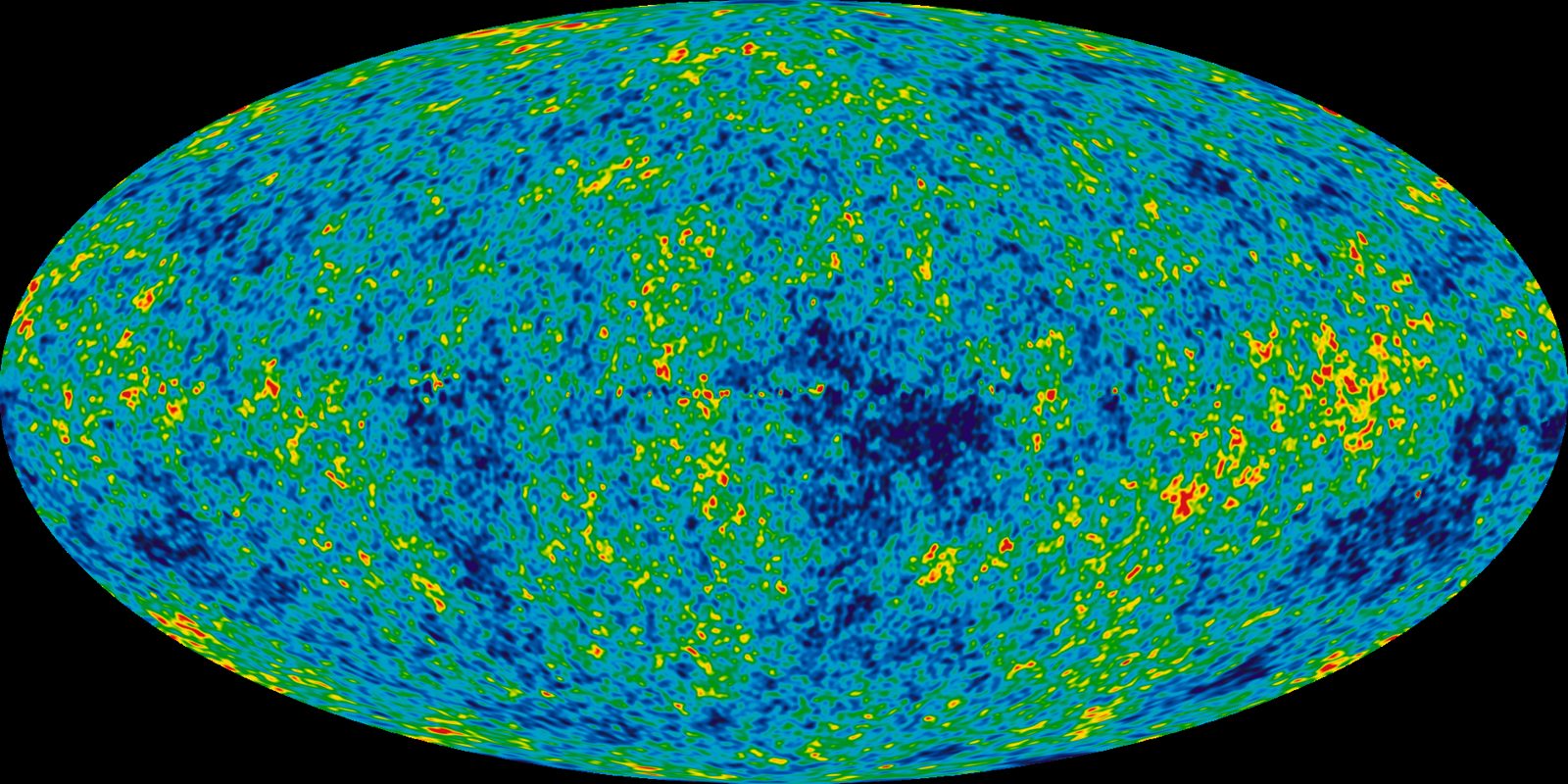
Paper 10b is not a physics paper, and this post is here to explain why it is in the series anyway. It is the paper that makes Paper 10’s wager enforceable, and after the corrections series has shown you how many ways a prediction can quietly become a fit, a document whose entire content is anti-fit machinery deserves its own entry.
What a companion paper is for
The problem it solves is specific. Paper 10 predicts a spectral feature with three parameters, and two of them, the amplitude and frequency, are reasonably pinned by the framework’s structure. The third, the phase, is not: the modular data admits multiple candidate values, and the historical failure was selecting the candidate that matched the data and calling the selection a prediction. Rewriting Paper 10 to be vaguer would have hidden the problem. Splitting the enforcement out makes it visible and auditable, which is the same reasoning that puts the retracted papers in public instead of the trash.
The three rules
The companion’s content is three rules, each closing one escape route.
Rule one: the phase is predicted before chains run, from a single preregistered route. Two routes are on the table, a modular-data argument with the anyon channel fixed by the leakage paper’s structure, and a holonomy integral with the cycle fixed by the interface topology. Exactly one is chosen, with the channel and cycle named, before any cosmological data is touched. The document forbids, in its own words, fitting phi freely and calling the best-fit value a prediction.
Rule two: the pipeline is shared. Same data, same priors, same code path for the baseline model and the framework’s model. The comparison is penalised: delta B I C better than minus 6, across the full data combination, with posteriors stable across subsets. A model that wins only on a tuned subset does not win.
Rule three: the mechanism must specify a bispectrum shape or say nothing. A power-spectrum wiggle with no accompanying three-point structure is underdetermined; the document requires the interference mechanism to produce its full higher-order signature, and if it cannot, the analysis is restricted to the power spectrum and recorded as such, with no borrowed template shapes.
Why the tooling requirements are physics
The document’s least glamorous section may be its most important. The cosmological scaffold code, as audited, had syntax fixed but referenced fields that do not exist in the cosmology codes, and an interface that was never validated. The companion requires, before any chain: recovery of the standard model to a tenth of a per cent when the framework’s amplitude is set to zero, grid convergence tests, positivity preservation in the parametrisation so the spectrum can never go negative, fixed random seeds, and versioned data. These are the checks that distinguish a feature from an artefact, and their absence is how spurious detections happen in this field at all.
The status of the whole document is preregistration: no result is claimed, none is permitted until the rules are satisfied, and the framework treats that as a feature. In a corpus whose corrections series has fifteen entries, the paper with no result and maximum discipline may be the one that changes the programme’s epistemics most. The next paper returns to physics, and to the darkest corner of the archive.