Paper 6: rotation curves from a very long-range mode
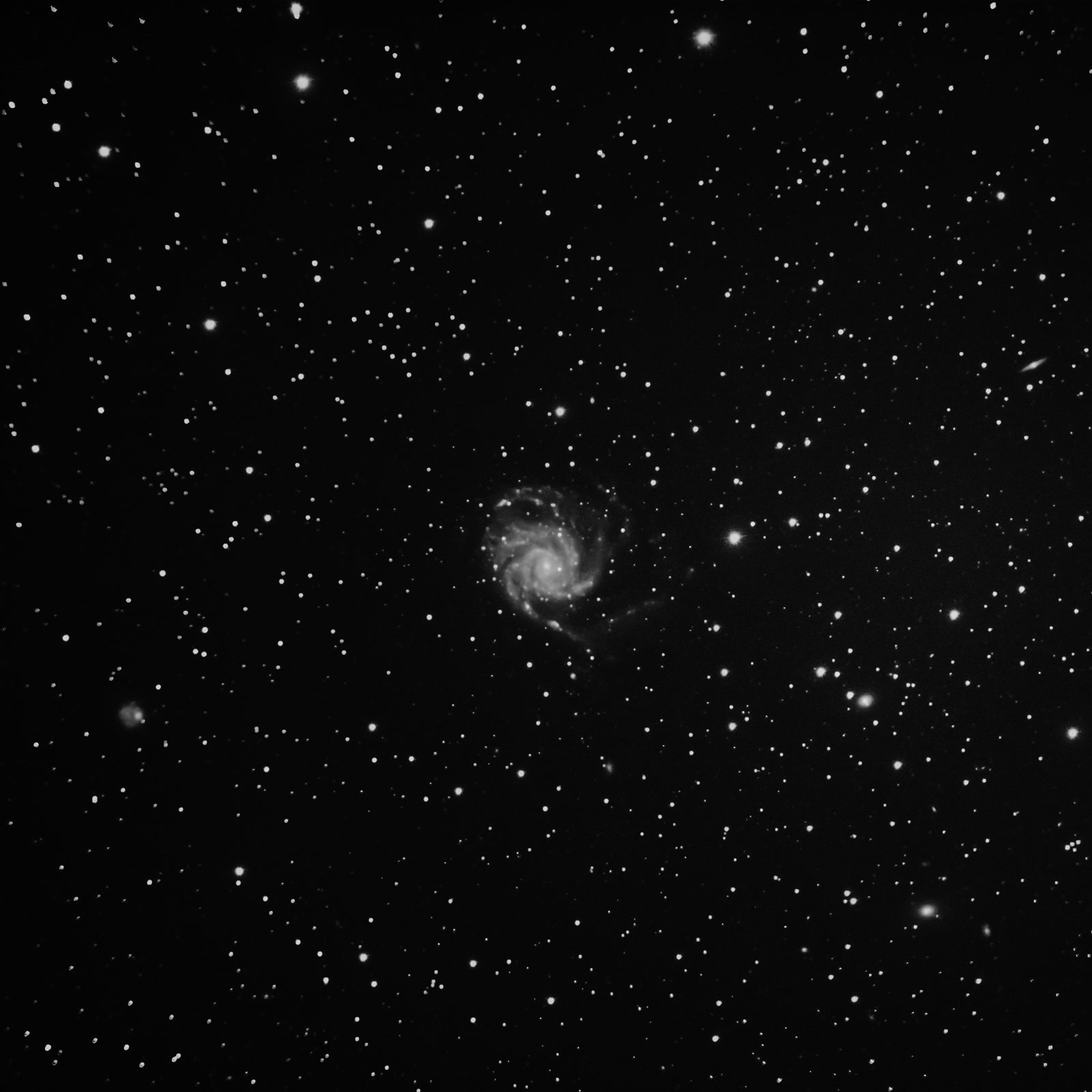
Paper 6 is the framework’s most conventional paper: it takes on galaxy rotation curves, the regime where MOND, modified Newtonian dynamics, has its strongest phenomenology, and proposes that the same branch-density structure that defines the multiverse produces a critical acceleration of the right order. Its history is a lesson in how a small arithmetic slip can hide a claim that was never going to work, and its present is a prediction designed to lose.
The idea
In the framework, what we call dark matter phenomena are partly the gravitational signature of branch structure: the substrate’s other sectors contribute an effective density that falls with a scale set by the boundary physics. The paper derives a characteristic acceleration from that scale, a zero, below which the effective dynamics becomes MOND-like, with the deep-MOND force law taking over from Newtonian.
The idea is not crazy as exotic-gravity proposals go, because the scale it needs, about 10 to the minus 10 metres per second squared, is the same order as the ratio of the Hubble scale to the speed of light squared, a coincidence MOND has always leaned on. If branch density sets a cosmic scale, an acceleration of roughly that size falling out is the kind of thing that could happen.
What went wrong
The paper’s derived value for a zero was printed as 1.2 times 10 to the minus 10, matching MOND’s fitted value. The audit recomputed the paper’s own formula and got 2.0 times 10 to the minus 10, sixty-six per cent higher, which is a modest error by this archive’s standards and a fatal one here, because the whole comparison to rotation-curve data lives or dies within that factor.
The deeper problem was structural. The framework’s natural value is 8.9 times 10 to the minus 11, six per cent below MOND’s fitted 1.2. The competing-avenues analysis quantified what that means: at realistic per-galaxy velocity errors of a few per cent, a fixed six-per-cent-low a zero is strongly disfavoured against a MOND fit that lets a zero float. The only way to keep the prediction is to free a zero, and freeing it removes the prediction. That fork, prediction without fit or fit without prediction, is the trap every modified-gravity proposal lives in, and Paper 6 has not escaped it.
What survives
The paper survives as a protocol rather than a result, and the protocol is worth having. The claim is now stated as a fixed-a zero prediction, 8.9 times 10 to the minus 11, no floating, and the decision rule is preregistered: joint fitting across rotation curves, lensing, and structure growth, with penalised likelihoods, and the branch-density model must beat MOND on the same data with the same pipeline or the claim is dropped. The audit’s estimate says the fixed version should lose. I have kept it in the series because the losing is supposed to happen in public, with the numbers visible, rather than in the private drift where modified-gravity claims usually die.
There is a real observation to keep in mind while the protocol waits: the recent DESI results on dark energy’s equation of state have shaken the cosmological constant’s status slightly, and any mechanism that touches vacuum energy touches the same ledger MOND’s a zero lives in. Paper 6’s subject is not isolated. It is one face of the framework’s one physical bet: that cosmic acceleration and galactic dynamics are both traces of the substrate’s structure. The next papers test the other faces.
The next paper is where the series turns to its failures, starting with the one the framework’s Standard Model claim once rested on: Paper 7.