Lions Are Coming Back Where People Get Paid to Keep Them Alive
On this page · 4 sections
- Also see: Who would win: rhino vs hippo
- Also see: What if the moon disappeared tomorrow
- Also see: Slow living: the art of doing nothing
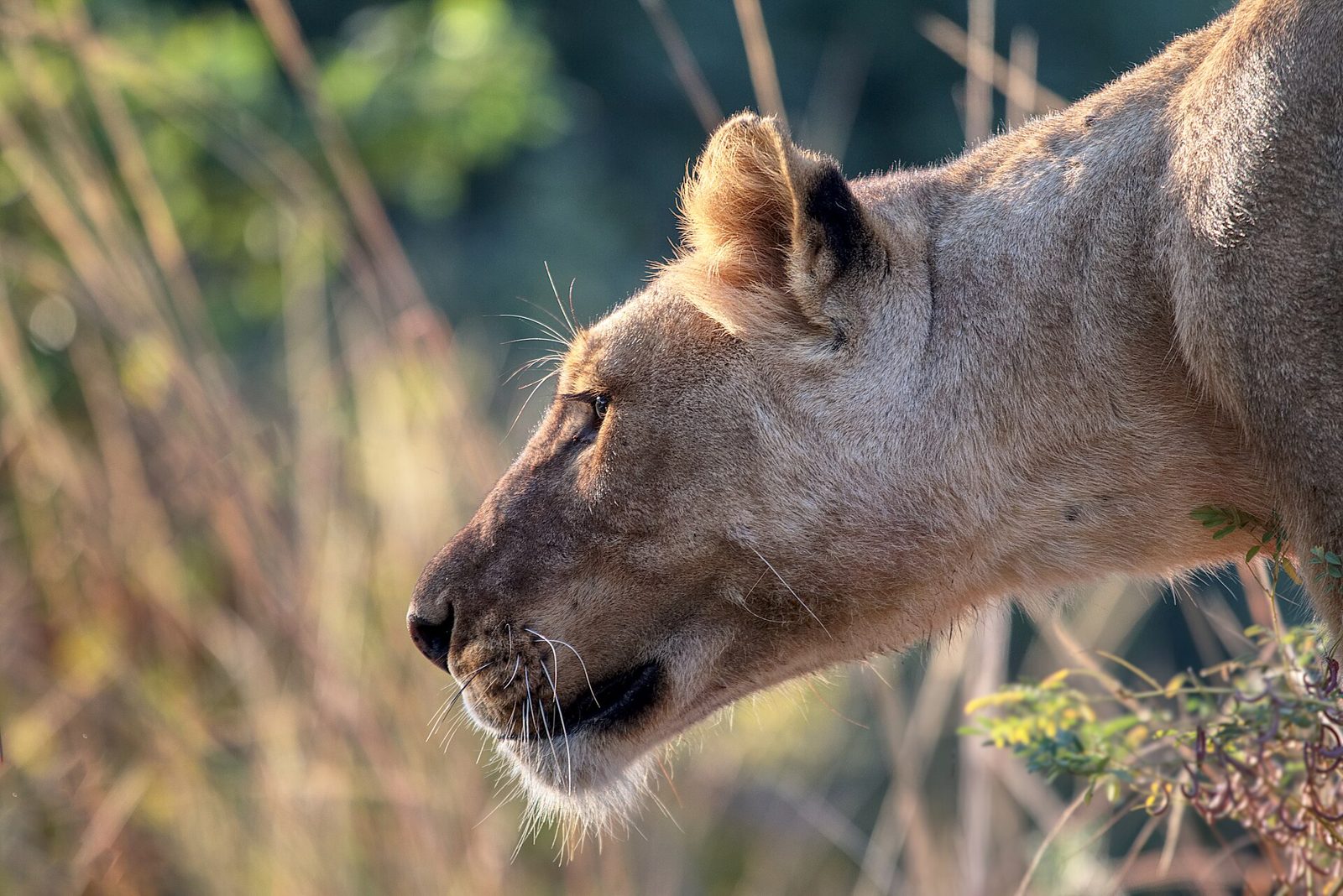
Africa had perhaps 100,000 lions a half-century ago. Today estimates commonly cluster around 20,000 to 25,000, with uncertainty that reflects how difficult wide-ranging carnivores are to count. Habitat loss, prey depletion, and killing after livestock losses all contribute. That is the continental headline, and it is grim. But inside the decline are recoveries and lower-conflict areas that show a usable mechanism: coexistence improves when the people bearing the cost have power, information, and a direct share in the benefits of wildlife.
That is more precise than saying a lion simply has to be “worth more alive.” Tourism revenue can help, but it is neither automatic nor sufficient. A household facing a missing cow tonight needs a safer enclosure, help recovering animals, credible compensation, and a reason to believe its community can influence the rules. The durable programmes combine those practical protections with local jobs and decision-making.
Namibia: the conservancy proof at scale
In the 1990s Namibia gave rural communities rights over wildlife on their land - to run conservancies, sign tourism joint ventures, and keep the revenue. Communal conservancies now cover a fifth of the country. Desert-adapted lions in the northwest, down to perhaps two dozen animals in the 1990s, recovered to well over a hundred. The mechanism is direct: a conservancy lodge hires dozens of people, and a dead lion threatens every salary. Tolerance, it turns out, is downstream of employment.
type: bar
title: Northwest Namibia desert lion population, 1995 vs 2015
x: 1995, 2000, 2005, 2010, 2015
Lions: 25, 50, 90, 120, 150
Drought and human-lion conflict have bitten into those gains since 2015—the model is not magic, and a hungry lion that finds cattle in a dry year still creates an immediate crisis. The lesson is not that conservancies replace protection, monitoring, or livestock husbandry. It is that conservation rules hold better when the people who live with them have enforceable rights and a visible stake in the result.
The Mara: guardians instead of spears
The Maasai Mara’s Lion Guardians programme took the retaliation problem head on. Maasai warriors are employed to track lions, warn herders, help recover lost stock, reinforce bomas, and intervene before a hunt forms. Research from southern Kenya associated the paired use of compensation and Lion Guardians with very large reductions in reported lion killing, while also finding that attitudes and cultural context mattered—not only the immediate financial loss. The insight generalises carefully: the people who know the landscape and carry the risk should help design, staff, and evaluate the response.
flowchart TD
    A["Tourism revenue shared locally"] --> B["Jobs depend on living lions"]
    B --> C["Tolerance for livestock losses rises"]
    C --> D["Retaliatory killings fall"]
    D --> E["Lion numbers recover"]
    E --> A
Compensation is a useful but delicate tool. It needs quick, transparent verification and payment, but it also needs to avoid rewarding poor husbandry or excluding households unable to navigate a claims system. Better night enclosures, herding practices, early warnings, and community-agreed consequences for poisoning or spearing all reduce the number of claims that must be paid. Speed matters because a delayed promise does not solve an acute loss; fairness matters because an opaque programme can destroy the trust it was meant to build.
What success has to pay for
Every recovery shares a structure: the lion’s value alive has to exceed its cost for the person deciding whether to reach for poison. International donors and distant tourists value lions abstractly; local benefits, local authority, and effective protection make that value concrete. But “benefit” has to mean more than a lodge job advertised in a brochure. Ask who receives revenue, who decides where it goes, whether women and poorer households participate, how a disputed livestock loss is handled, and what happens when visitors disappear during a drought, recession, or pandemic.
This is why the programme is as much governance as ecology. Lions need prey, connected habitat, law enforcement, and monitoring. People need reliable livelihoods and institutions that respond before an individual loss becomes retaliation. A project that measures only lion numbers can miss the warning signs; a project that measures only income can miss whether predation is rising. The informative metric is coexistence over time: fewer killings, less loss, fairer benefits, and a population that is breeding without being fenced into an island.
The evidence from a peer-reviewed Lion Guardians study supports that more demanding version of the story: attitudes, cultural practice, and conflict mitigation all matter together.
Count the mechanism, not only the lions
Conservation stories are easy to over-credit. A lion population can improve because rainfall lifts prey, because enforcement changes, because a neighbouring population moves in, or because researchers finally count more accurately. A tourism project can also look successful while benefits go to a narrow group and the costs remain with everyone else. The right standard is a before-and-after comparison that tracks both ecological and human outcomes: livestock losses, reported killing, response times, household participation, revenue distribution, prey abundance, and survival of adult females and cubs.
That broader scorecard also reveals failure early. A drop in killings alongside rising livestock losses may mean that tolerance is being purchased at an unfair price. Rising tourism income with no local voice is fragile when the next crisis dries up visitors. The goal is not to make communities passive beneficiaries of a global wildlife economy. It is to make them capable partners in a landscape where a lion is a real neighbour, not an abstract emblem.
Further reading from independent authors


Take a break
A mini crossword and a Sudoku, set for this article. They play offline and nothing leaves your browser.
Mini crossword
Across
Down
Sudoku 0:00
Comments
Loading the conversation…