Ninety Ripples: What LIGO's Third Gravitational-Wave Catalog Actually Changed
On this page · 7 sections
Also see: How to measure your home’s ventilation Also see: Top 10 ways to read faster Also see: The evolution of multi-messenger astronomy
The headline is the number. Ninety. Six years after the first detection, LIGO, Virgo and KAGRA have 90 confident gravitational-wave candidates, the third release adding 35 from the second half of the third run.
The number is the least interesting thing in it. One event is a discovery. Ninety is a population, and populations have distributions. Distributions have gaps, and gaps are where physics hides.
The instrument is a ruler made of light
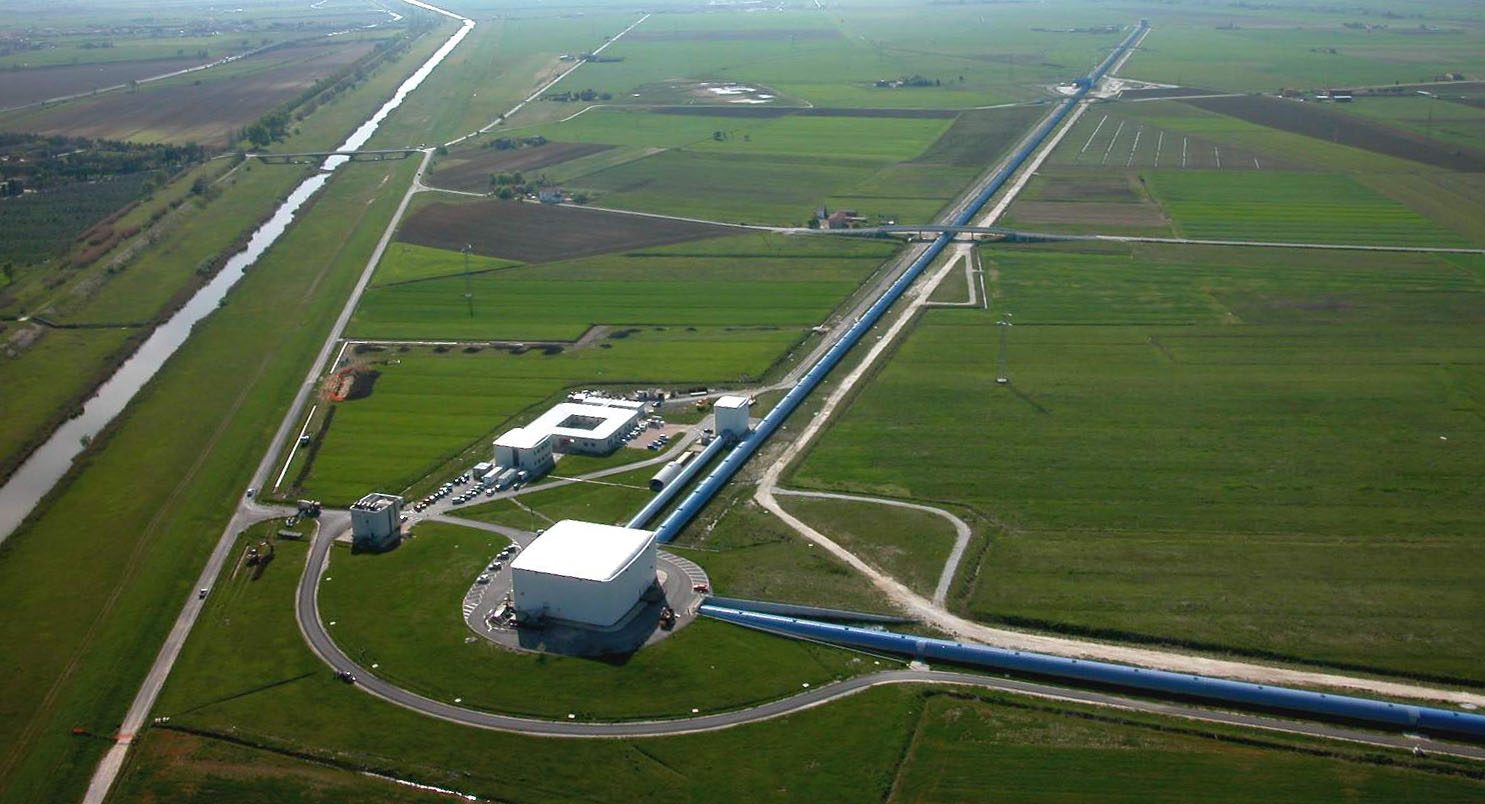
Start with the machine, because everything about the results follows from how crude the measurement is. LIGO is two L-shaped vacuum tubes, four kilometers long, in Louisiana and Washington. A laser hits a beam splitter near the corner; one arm reflects off a far mirror and returns, the other does the same. In phase the beams recombine onto a photodiode; out of phase they cancel.
A wave changes the two arm lengths differently, stretching one and squeezing the perpendicular one. That differential is around one part in 10^21 — a thousandth of a proton diameter spread over four kilometers. Hence the evacuated tubes and multi-stage pendulum suspensions.
Then the noise: seismic hum, thermal motion in the mirrors, quantum noise from the light, residual gas. So the analysis works on the shape of the signal rather than its amplitude, matching a bank of simulated waveforms — general relativity predicts a specific chirp for each mass pair — against the data. That template matching is how significance gets assigned.
Which is why the false alarm rate governs everything else. A pipeline on a noisy stream always produces peaks. Lower the threshold and you would find a thousand “events,” mostly noise. The catalog is fixed at a stated false alarm rate, roughly one spurious event per year of data. Candidate is a precise word: the pipeline exceeded a noise budget, not that nature obligingly produced something.
type: bar
title: Cumulative gravitational-wave candidates per catalog
x: GWTC-1, GWTC-2, GWTC-3
Cumulative candidates: 1, 44, 90
New in this release: 1, 44, 35
From strain to publication
The path from a strain to a catalog entry is long, and most of it is spent saying no.
flowchart TD
    A["Strain data from interferometers"] --> B["Detector characterization and glitch removal"]
    B --> C["Template match across waveform bank"]
    C --> D["Significance test against background estimate"]
    D -->|"above false alarm threshold"| E["Candidate event"]
    D -->|"below threshold"| S["Subthreshold reservoir, 1048 events in O3b"]
    E --> F["Public alert within minutes"]
    F --> G["Electromagnetic and neutrino follow-up"]
    G --> H["Re-analysis with calibrated data"]
    H --> I["Validation and parameter estimation"]
    I --> J["Catalog inclusion or demotion"]
O3b produced 1,048 subthreshold events — signal-like excursions that did not clear the bar. They are not junk but a reservoir: if thresholds change, some can be promoted retroactively, and their distribution is itself a handle on the rate. A catalog release is a snapshot taken with one threshold, not the final count.
The alert path is why 39 alerts do not become 39 detections. Alerts fire within minutes so telescopes can swing before the source fades; re-analysis with better calibration then demotes most. Eighteen survived.
The mass gaps are the interesting part
Thirty-two of the 35 new candidates are ordinary binary black hole mergers. That is the modal event and it is unsurprising. The three that are not are where the argument is.
There is a mass gap. Neutron stars above roughly 2 solar masses are not produced in supernovae; black holes below roughly 5 have no clean formation story. Very massive stars should leave black holes, but collapse to a light one appears to need an electron-capture supernova, and that physics is unsettled. Very light stars collapse to neutron stars. Nothing in between has a confident mechanism.
GW170817 was a neutron star merger seen in gravitational waves and gamma rays simultaneously, components around 1.4 and 1.5 solar masses — squarely inside the neutron star band, 130 million light-years away. One event calibrated a branch of nuclear physics.
GW190814 was different in kind: an object of about 2.6 solar masses merging with a stellar-mass black hole, sitting in the gap where there should be nothing. The obvious reading is a heavy neutron star, meaning nature makes supernova-free ones more easily than anyone modelled. Equally live: a low-mass black hole from a fragmented progenitor, or a compact object we have no name for.
O3b’s three gap candidates push that sample from suggestive to statistically interesting. Three is not enough to do physics on, but three events sitting where the formation channels are unknown is exactly the pattern that makes a field reorganise.
What 90 events does to the statistics
Here is where the catalog earns its name. With 90 candidates you can do things that were impossible with 44.
The mass distribution. Fit the primary mass function and see how many channels you need. The current best-fit needs more than one: chemically homogeneous evolution, stellar mergers producing black holes in pairs, and accretion onto a neutron star each leave distinguishable bumps and tails. One channel does not fit; three or four do.
The spin distribution. Spin near zero means isolated stellar collapse; near maximal means a companion spun it up. The fraction of each measures how many binaries are built the second way.
Rate and distance scaling. The merger rate scales as the cube of distance, so doubling strain sensitivity finds eight times as many sources. That is why the run schedule matters as much as the hardware — O3 lost time to upgrades, vacuum problems, and COVID, and lost time is lost sky.
Tests of general relativity. With one event you exclude parameter regions. With 90 you constrain the parameters themselves — is the graviton mass zero, are there extra polarisation modes, does the ringdown decay as the no-hair theorem requires. Deviation scales as the inverse square root of the event count, so 44 to 90 tightens bounds by roughly 30%: the difference between a suggestive limit and a credible exclusion.
Why two detectors beat one
A single interferometer can detect a chirp but cannot localise it well. Two detectors give two time delays, and a delay plus detector geometry gives a sky ring — which is why Virgo and KAGRA matter disproportionately. Triangulation collapses the ring to a patch, small enough to point a telescope at.
The numbers show it: only about a third of O3b candidates have a sky position worth searching. That is the biggest lever on multi-messenger astronomy — not sensitivity, but localisation. Every extra detector at a good distance from the others converts single-detector events into localisable ones. GW170817 needed seven detectors for tens of arcseconds; without that, the optical counterpart would have been one candidate among hundreds in the same error box.
What O4 brings
The fourth run is where this stops being incremental. Sensitivity roughly doubles again against O3 with more observing time, a volume gain of ten or more. If the rate estimates hold, O4 alone should produce detections in the many hundreds.
The hardware changes too: new mirrors, better seismic isolation, and work on cryogenic interferometers that would trade modest sensitivity loss for a large cut in quantum noise. KAGRA matters even at lower sensitivity — different hemisphere, and the first interferometer underground, shielded from seismic noise by Earth itself.
But what would change the science most is not the detection count. It is the localisation.
The honest summary
GWTC-3 did not break general relativity. It did not find primordial black holes or a new force. It added 35 mergers, promoted three gap objects, and moved the field from discovery to demographics.
The failure mode to watch is not a wrong event but statistical slack: 90 candidates is still few enough that two-channel and three-channel fits are hard to separate, and the mass function has enough freedom to absorb a surprising number of new detections. The first few hundred events are when the population statistics stop being suggestive and start being constraints.
Until then: 90 ripples, and the water is still settling.
Further reading from independent authors

Take a break
A mini crossword and a Sudoku, set for this article. They play offline and nothing leaves your browser.
Mini crossword
Across
Down
Sudoku 0:00
Comments
Loading the conversation…