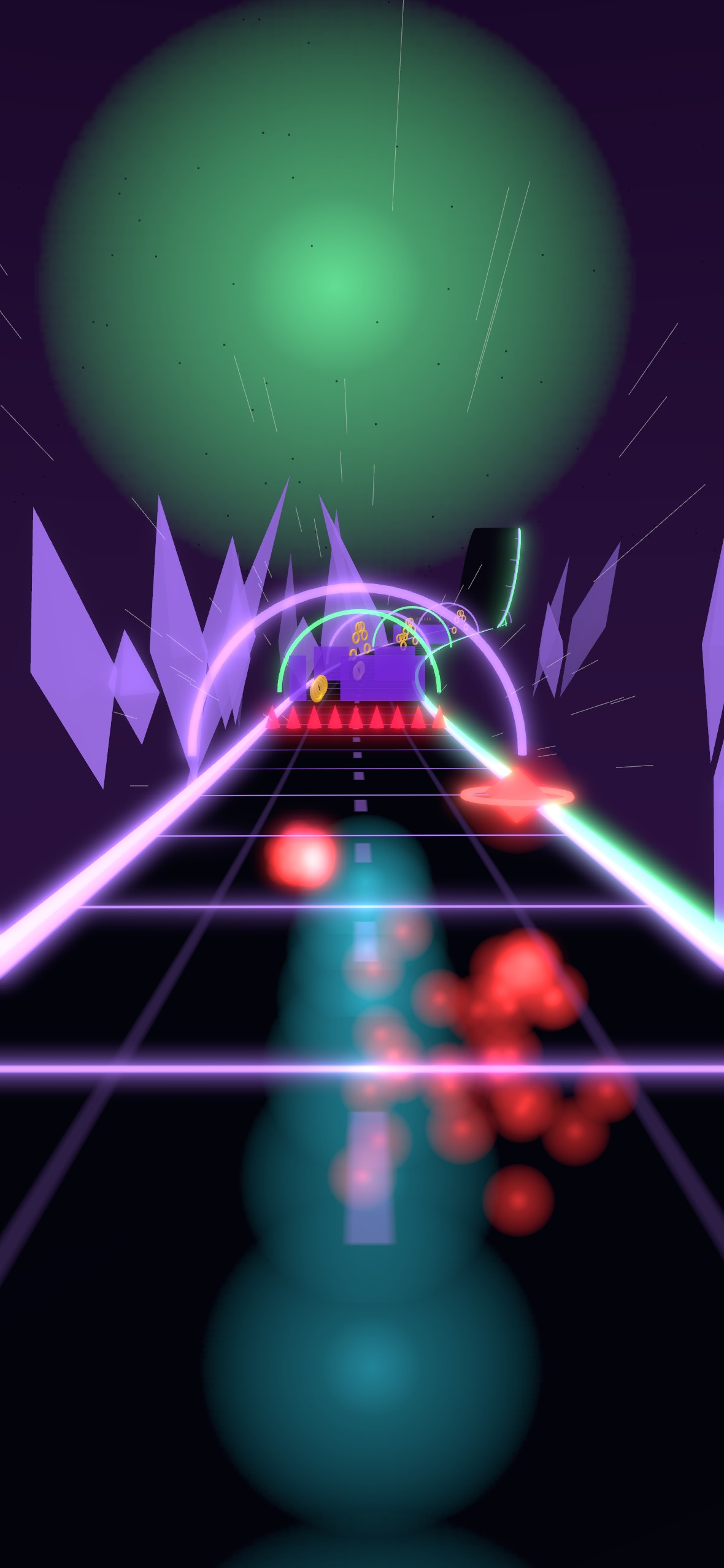
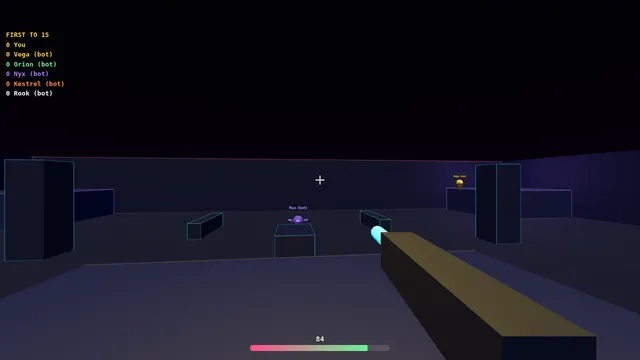
 🌐 Deathmatch · up to 8
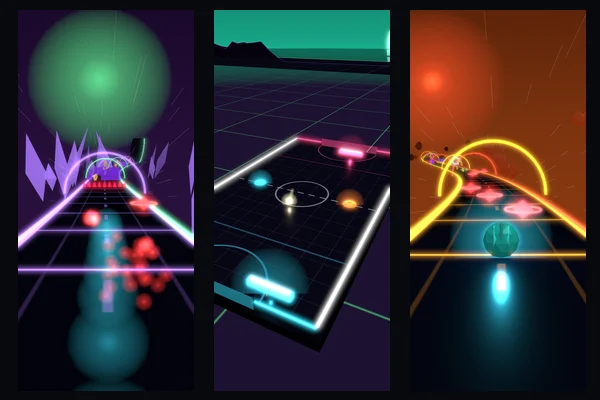
 Void Arena A neon arena shooter with five weapons, loot, power-ups and supply drops. Frag bots or other members online, earn medals and rank up, to its own pounding soundtrack. ▶ Play free
Games · Books · Software
Play it. Read it. Own it.
12 games to play free or keep forever, books by independent authors, and the OMMAIS software, all in one place.
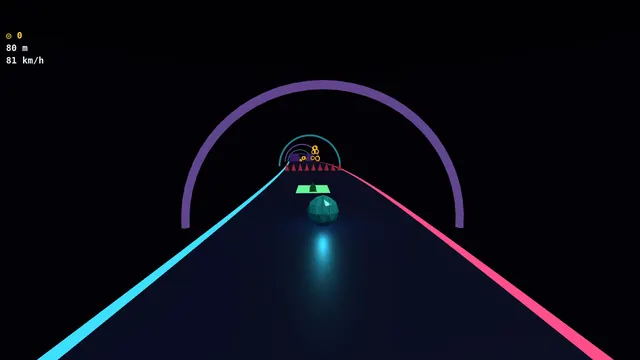
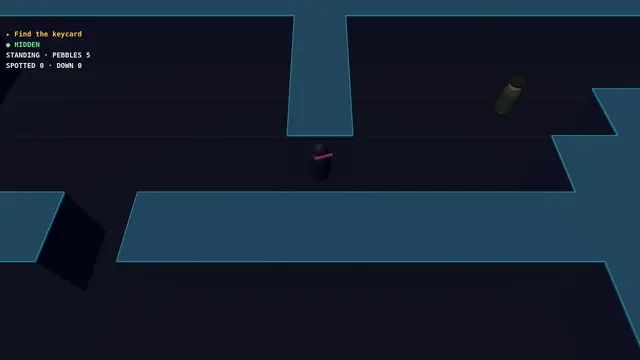
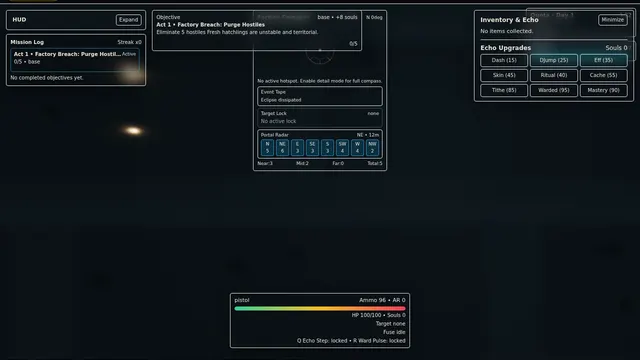
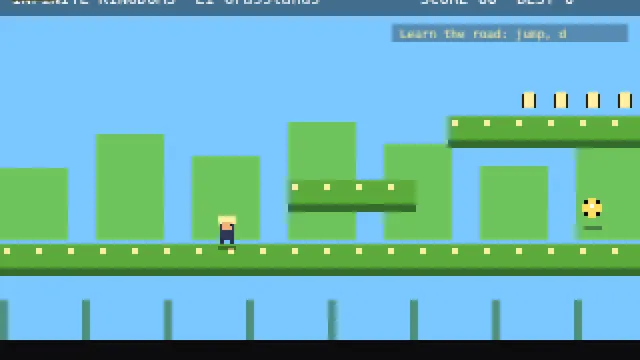
Every game plays free, right here, on a phone, tablet or computer. Like one? Buy it for $1.99 and keep it: one file that plays offline in any browser, no install, no account. Games marked 🌐 can be played online with other members.
Every game as its own offline file, 67% less than one by one.
🌐 Deathmatch · up to 8  🌐 Explore together · up to 16
 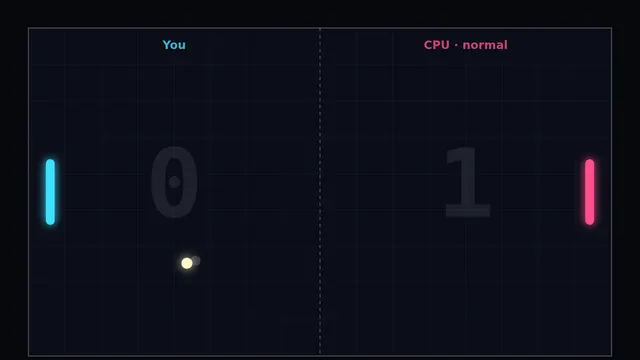 🌐 1 v 1
 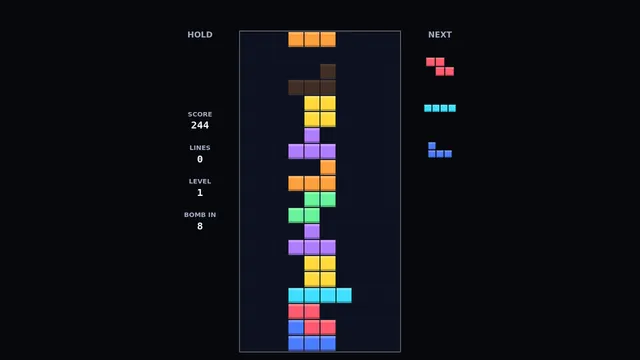 🌐 Versus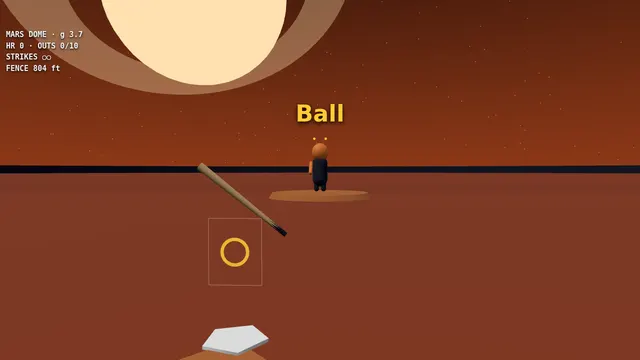
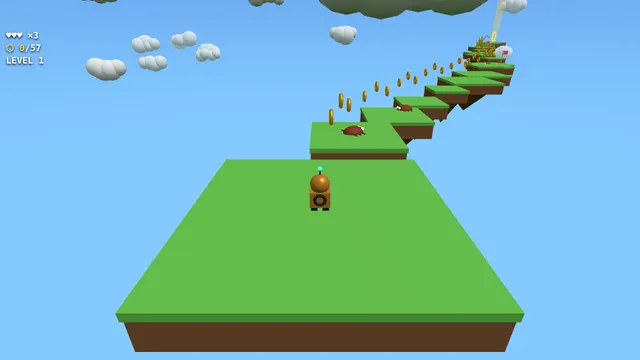
Bought before? Your downloads are at the link on your receipt, or under your purchases when you're signed in.
Books by independent authors. Buy at the store each author chose, or, where the author sells the ebook here, right on its page.
Science Fiction
by Eric Varney
This is the first of a series about a government program called the Socionautics project that employs remote viewing, a form of psychic espionage, to spy on enemies, allies,…

Horror
by Eric Varney
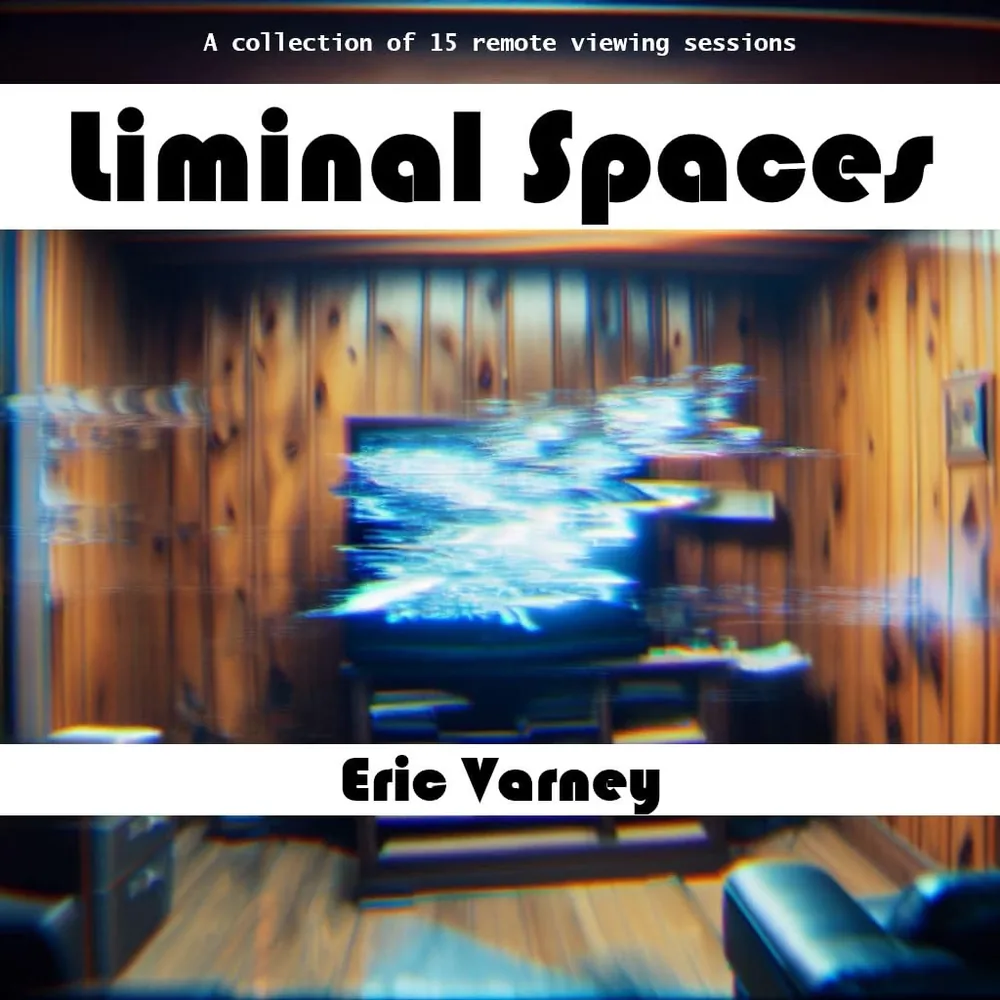
Welcome to the thresholds of human experience, the places between memory and machine, life and data, silence and signal. Liminal Spaces: Primal Scream Therapy is a collection…

Science & Nature
by Eric Varney
A Unified Theory of Knowledge Limits, Multiverse Simulation Reality, and Synthetic Data Harvesting. The argument that civilisation has reached a plateau in its capacity for…

Science Fiction
by Eric Varney
An astral projectionist working for the socionautics project, a government espionage program, is trapped in an ethereal nightmare box on his way to an assigned target in the…

Science & Nature
by Eric Varney
Anomaly, Consciousness, and the Edge of the Finite. A chain of logic from the measurable limits of scientific discovery, through the architecture of advanced information…
Wallpapers rendered from the OMMAIS games, for phone and 4K desktop, and sound packs made in code for focus and winding down. Download straight after paying; yours to keep.
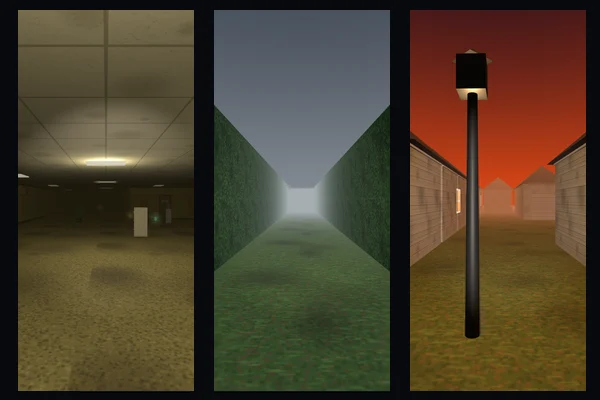
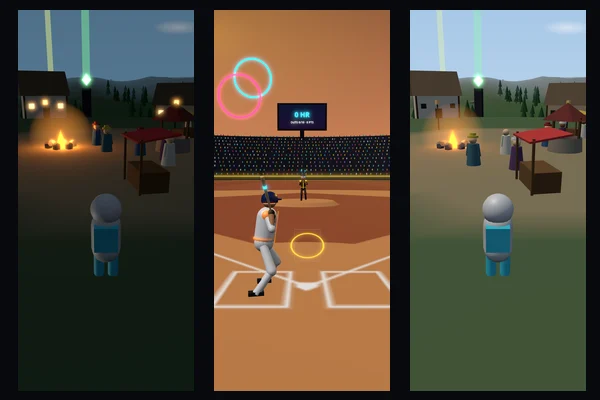
All three wallpaper packs Liminal Spaces, Neon and Worlds together.
Focus and Sleep Sounds Both sound packs together.
Binaural tracks need headphones; isochronic ones work on speakers. These are background sounds for focus and relaxing, not a treatment for anything. Don't listen while driving.
Wrote a book? Put it in front of OMMAIS readers: $10, once.
A local AI workstation. It runs a panel of models on your own hardware, over your own files, and nothing leaves the machine.
The single number that matters is how much VRAM your graphics card has (or unified memory, on an Apple Silicon Mac). A model has to fit in it to run at a sensible speed. With VRAM optimisation on — it is on by default, in the demo's Settings — only one seat's model is resident at a time, so the figure to compare against is your largest single choice, not the total of all five.
| You have | Comfortable model size | Examples to pull |
|---|---|---|
| 6–8 GB | 3B–8B, quantised | llama3.2:3b, qwen3:8b |
| 12–16 GB | 8B–14B | qwen3:14b, gemma3:12b |
| 24 GB | 24B–32B | qwen3:32b, gemma3:27b |
| 48 GB+ / multi-GPU | 70B and mixture-of-experts | llama3.3:70b, gpt-oss:120b |
| No dedicated GPU | 1B–3B, on the CPU | llama3.2:1b — slow, but it runs |
| A phone, via Termux | 1B–3B, occasionally 8B | llama3.2:1b, qwen3:1.7b — 8B only on
a recent flagship |
Retrieval needs one more, and it is small:
ollama pull nomic-embed-text is 274 MB. Without an
embedding model the demo's Your files panel has nothing to index
with, and reads as broken rather than unconfigured.
Not because it is more model. Routing the best model to each task caps a panel at the best single model's score on any one question — strengths do not stack. The gain comes from three specific things one model working alone cannot do.
All three depend on something a single model answering a question does not: whether each seat can follow an instruction precisely. A model on its own is mostly limited by what it knows. A pipeline is limited by obedience to a contract — Conductor 1 has to emit briefs in an exact format, the experts have to respect an EXCLUDES clause and stay off each other's territory, the thinking seat has to judge work rather than summarise it, and Conductor 2 has to synthesise instead of concatenating.
Small models fail at those jobs visibly. Run the workspace on a 1B and you will watch Conductor 1 ignore the brief format outright — the interface says so when it happens, and falls back to running the experts on the request directly. That is a worse plan, and the answer is correspondingly worse. The same request through a 30B or a 120B produces briefs that genuinely divide the work, and an answer that reads like one considered piece. This is the honest reading of the claim: the panel is a multiplier on seats that can hold a contract, not a way of making small models behave like large ones.
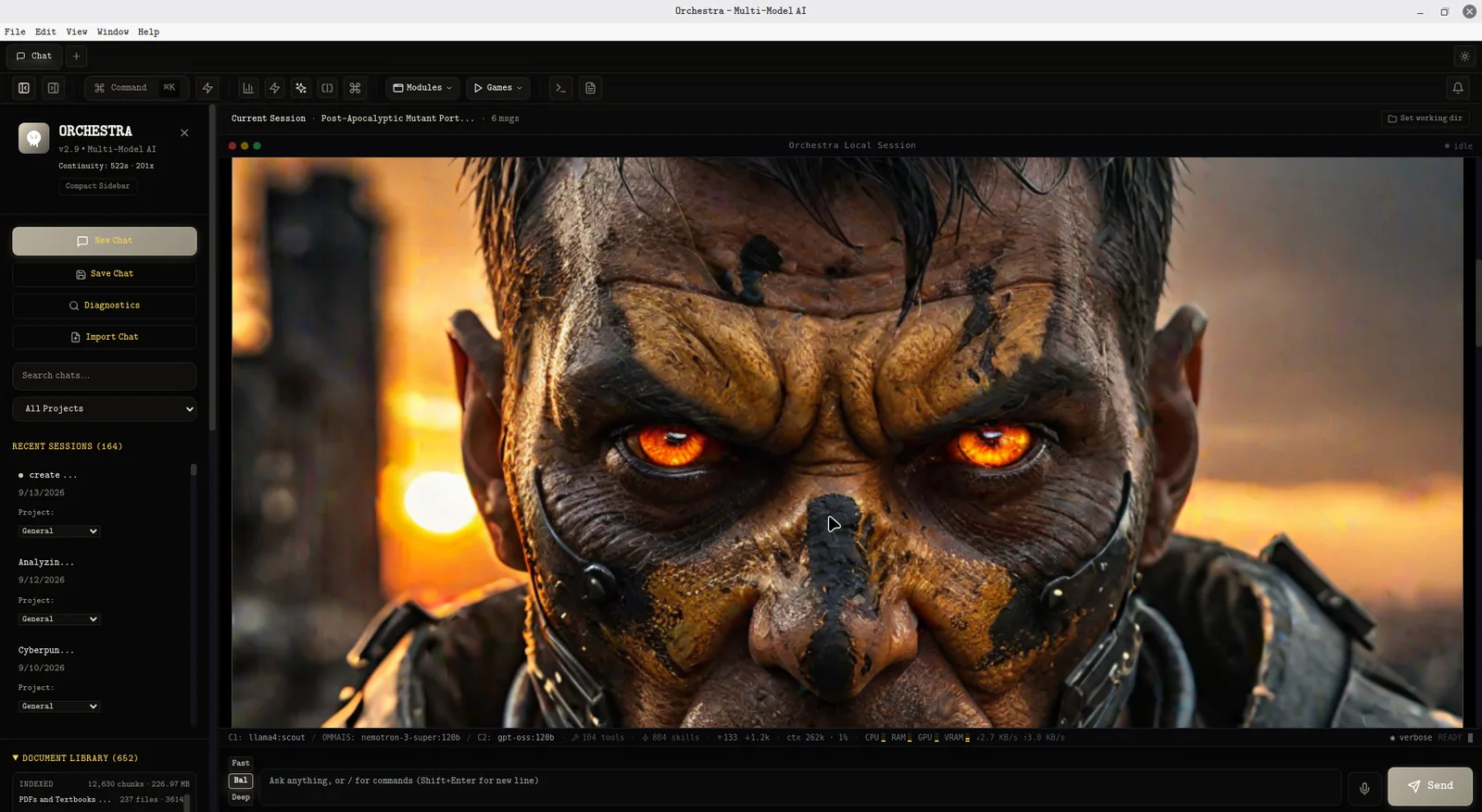
The screenshot further down this page is the full product on this author's own hardware: three different flagship models in the Conductor 1, OMMAIS and Conductor 2 seats at once, a 262k context window, and a library of 652 documents indexed to 12,630 chunks for retrieval. That is what the ceiling looks like. The workspace is the same shape with the ceiling removed.
What this is not: consensus, averaging, or asking three models and taking the most popular answer — none of which produce any surplus at all. And small models in an ensemble are not inherently safer than one large one; capability is capability. What is true of OMMAIS is that every hop is inspectable, every run can be interrupted, and all of it is yours, on your own hardware.
In development — not yet released
The next version — in development
A rebuilt OMMAIS: the same local-first idea, with the coding lane, the approval gate and the workspace tools reworked from the ground up. Not released yet — no date promised, because a date promised is a date missed.
Available now
The current release
The version available today. A local multi-model AI workstation: a panel of models running on your own machine, over your own files, with nothing leaving it.
Several models work a problem together, each on the part it is suited to, instead of one model answering everything alone.
Point it at a folder and its contents become searchable context. Re-index and only what actually changed is read again.
Hidden text in a document is indexed as evidence and never promoted to an instruction. Read is not the same as trust.
File edits are proposed as a diff and wait for approval. Silence is never consent. The workspace reproduces the read-and-reason half only: it reads your library and reasons over it, and has no write path at all.
OMMAIS also ships with games, and they run in your browser. Play them in the Marketplace →