The CRT Comeback: Why Obsolete TVs Are Worth Money Again
On this page · 5 sections
- Also see: Cord-cutting is no longer cheaper
- Also see: Every streaming service, ranked
- Also see: Top 10 dumb phones for 2026
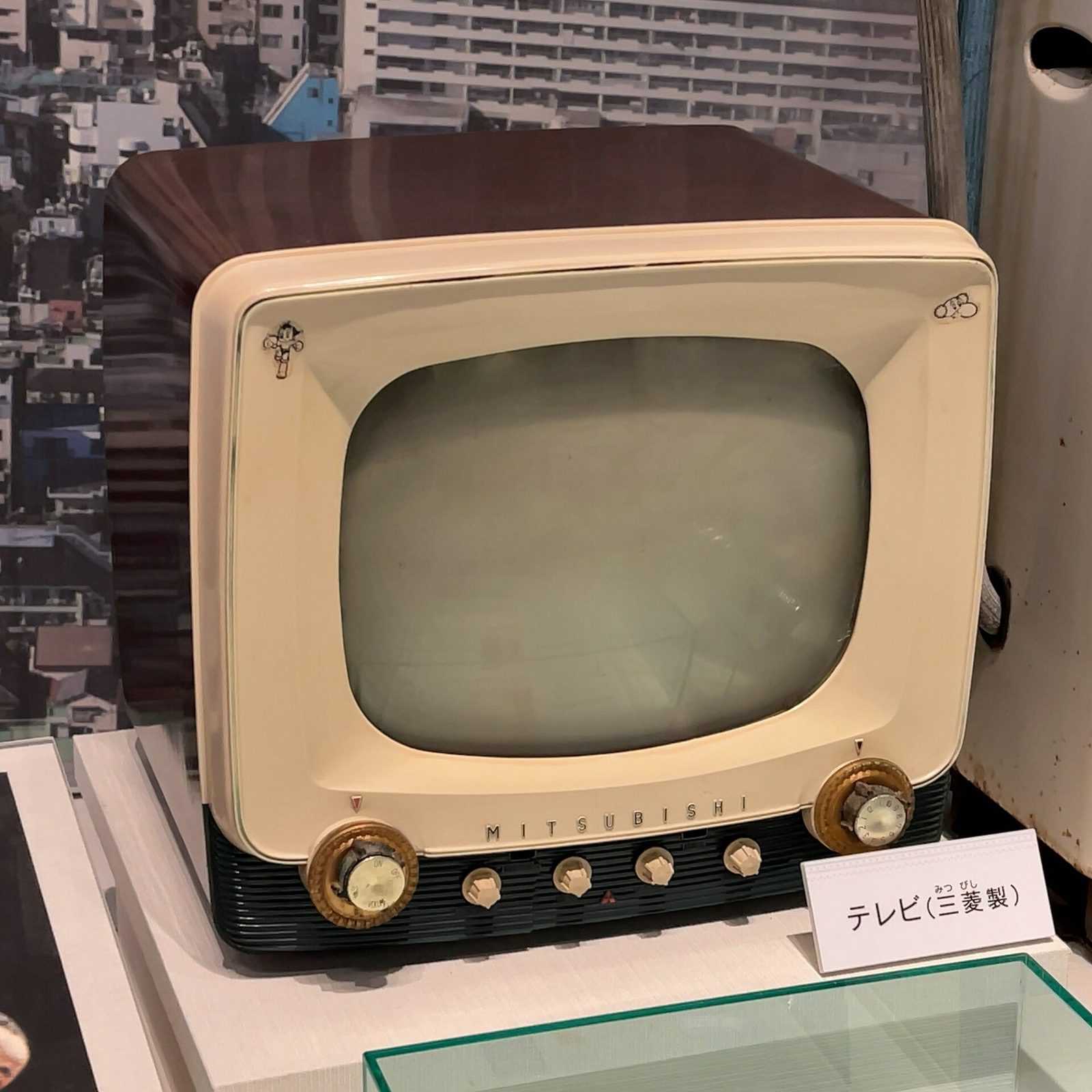
Sometime around 2010, the cathode-ray tube television completed its journey from living-room centrepiece to curb-side embarrassment. Flat panels won on every axis that mattered at retail: thinner, lighter, bigger, sharper on the spec sheet. People paid to have CRTs hauled away. Then, slowly, a funny thing happened. Prices bottomed out, turned around, and climbed. A Sony Trinitron that could not find a taker at a garage sale now lists for hundreds. Broadcast monitors that stations junked sell for thousands. The obsolete display is back - and the reasons are physical, not sentimental.
Lag is real, and gamers feel microseconds
A CRT draws the picture by sweeping an electron beam across phosphor line by line as the analog signal arrives. It does not show the whole frame at once, but it generally introduces almost no frame-buffering delay of its own. A modern flat panel may buffer frames, process the image—noise reduction, motion smoothing, scaling—and then display it. A good current set in game mode can be very fast, but the processing pipeline and the way the screen holds each frame make it behave differently. At 60 frames per second, each frame lasts 16.7 milliseconds, so even a one-frame difference matters in a game built around frame windows.
type: bar
title: Display lag from signal to photons, by technology
x: CRT, OLED game mode, LCD game mode, LCD standard mode
Lag in milliseconds: 1, 10, 18, 60
The chart is a useful order-of-magnitude comparison, not a universal benchmark: a particular console, scaler, cable, and television can change the result. Speedrunners sometimes keep CRT and modern-display categories separate for exactly this reason. A trick requiring frame-perfect timing on a CRT becomes timing-plus-guesswork on a poorly configured panel.
Scanlines are the picture, not dirt on it
Retro games were drawn for CRT physics. A 240p signal on a sharp modern panel is a grid of hard square pixels the artists never saw; on a CRT, the scanlines and phosphor bleed blend dithered colours into shades the hardware could never produce directly. Artists exploited this deliberately - the waterfall in Sonic, the transparencies in countless SNES games, are optical tricks that only resolve on a tube. Emulation authors spend enormous effort on CRT shaders simulating aperture grilles and phosphor decay, which tells you the look was load-bearing, not incidental.
Then there is the light gun, the era’s most honest peripheral: the NES Zapper and its cousins detect the raster beam’s timing, which only exists on a CRT. No adapter makes a Zapper work on an LCD, because there is no beam to time. Some games are simply unplayable without the obsolete display.
flowchart TD
    A["Retro signal, 240p"] --> B{"Display?"}
    B -->|"CRT"| C["Scanlines blend dither, zero lag, light guns work"]
    B -->|"Flat panel"| D["Hard pixels, frame buffering, shaders approximate"]
    C --> E["The picture as drawn"]
    D --> F["An approximation, improving yearly"]
Scarcity meets a manufacturing impossibility
Here is the hard edge of the revival: nobody can make more. CRT manufacturing required leaded glass funnels, phosphor chemistry and electron-gun assembly at industrial scale, all of it wound down globally by the early 2010s. The remaining stock is finite, ageing - capacitors dry out, phosphors dim - and increasingly rescued by a repair community that recaps chassis and shares service manuals for sets older than its members.
Prices reflect the physics of supply. Consumer Trinitrons climb steadily; professional video monitors, with their finer pitch and calibration controls, command four figures. The market is a slow-motion demonstration that progress narratives have blind spots: flat panels won on thinness and size, dimensions retail could price, while quietly surrendering responsiveness and motion clarity that took a decade of OLED development to partially reclaim.
The CRT’s return is not nostalgia. Nostalgia does not pay 400 dollars for a 90-pound television. It is rediscovery: a generation raised on panels encountering the older technology on its merits and finding, in specific dimensions, that the future lost something worth keeping.
What a CRT is actually good at
The case is strongest for original hardware from the 8-, 16-, and 32-bit eras, plus arcade boards and light-gun games. Those systems usually output 240p or 480i over analog connections, modes that a tube accepts naturally. A modern television can still be excellent for them, especially with a well-made low-latency scaler, but it has to identify and transform a signal that a CRT simply draws. For modern consoles, movies, desktop work, subtitles, and high-definition games, a flat panel is plainly more practical—and often better.
Motion is the other distinction that takes a little explaining. A CRT’s phosphors flash briefly and decay, so the eye sees less sample-and-hold blur as it tracks a moving object. An LCD or OLED holds each pixel until the next refresh; the panel can have near-instant pixel response yet still look softer in motion because of how human vision follows it. Black-frame insertion and high-refresh OLED narrow that gap, but they can reduce brightness or introduce their own trade-offs. “CRT motion looks better” is shorthand for this system-level difference, not proof that every old tube beats every new display.
Buy carefully, or skip the hunt
Do not begin by chasing a professional video monitor. PVMs and BVMs were built for production work, have unusually sharp tubes and useful controls, and are now collectible; they are often a bad first purchase at collector prices. A clean consumer set with component or S-Video inputs can deliver the period-correct experience for far less. Condition beats badge: inspect the geometry, focus, colour purity, brightness, and remote-controlled menu; ask to see it running for at least ten minutes; and make sure you can physically move it.
Plan the signal chain before buying. Many consoles need an adapter, a quality cable, or a dedicated scaler to reach the inputs on a given set. The tube may be free, while a safe stand, cable, and maintenance absorb the real budget. CRTs contain high voltages even after unplugging and are extremely heavy. Do not open one unless you are trained to service it, and use an electronics recycler rather than ordinary trash when it reaches the end of its life. The revival is at its best when it rescues a working display, not when it turns obsolete hardware into a dangerous decor project.
Take a break
A mini crossword and a Sudoku, set for this article. They play offline and nothing leaves your browser.
Mini crossword
Across
Down
Sudoku 0:00
Comments
Loading the conversation…